• Request Info
  • Visit
  • Apply
  • Give
  • Request Info
  • Visit
  • Apply
  • Give

Search

A-Z Index Map

College Scholars Program

  • About
    • Program Overview
    • Benefits and Privileges
  • Prospective Students
    • Admissions to UT
    • Apply to UT
  • Current Students
    • Advising
    • Courses
    • Study Abroad
  • People
    • Director of College Scholars
    • Student Directory
  • Alumni and Friends
    • Alumni Advisory Board
    • Alumni Network
    • Newsletters
    • Give

Alumni Spotlight – Anne Buckle

Alumni Spotlight – Anne Buckle

Alumni Spotlight – Anne Buckle

September 29, 2020 by artsciweb

no photo available

Alumni Spotlight – Anne Buckle

Profile

Giving Voice

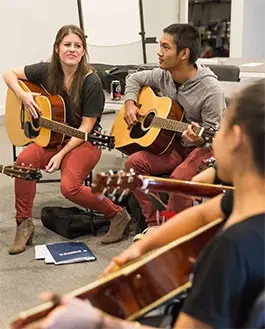
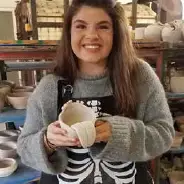
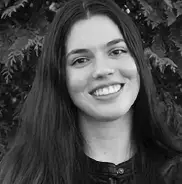
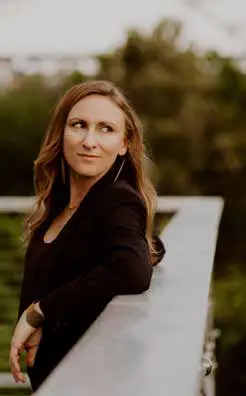
College Scholars alumna Anne Buckle (’11) started the Nashville-based non-profit organization 3 Chords in 2016. The mission of 3 Chords is to help refugee youth share their stories through original songs in hopes of fostering global understanding and respect. The name 3 Chords comes from a common phrase in the songwriting community: the only thing you need to write a song is “3 chords and the truth.”

As a songwriter herself, Anne took that phrase to heart, believing it could empower teenagers new to America to tell their truth through music. The first compilation album, 3 Chords: Volume 1, is available on 3chords.org, showcasing the original songs and voices of seven individuals hailing from Iraq, Burma, Thailand, and Nepal.

Filed Under: Newsletter

Alumni Spotlight – R.J. Vogt

Alumni Spotlight – R.J. Vogt

September 29, 2020 by artsciweb

no photo available

Alumni Spotlight – R.J. Vogt

Profile

R.J. Vogt (’15) Senior Reporter at Law360

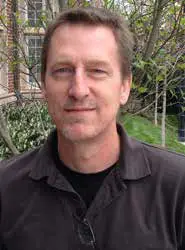
I started working for Law360 in August 2017, diving in head first to the world of class action complaints, million dollar settlements, and shady corporate mergers. Over the next year, I wrote more than 500 daily news stories covering everything from Stormy Daniels’ suits against the President to Tesla investors’ suits against Elon Musk to sexual harassment allegations against the attorney general of New York and a renowned circuit court judge. I also won an in-house “Best Trial Coverage 2018” award for my work reporting on a $100 million dispute over who really invented the Beats headphone brand (hint: it wasn’t all music mogul Jimmy Iovine and rapper Dr. Dre’s idea, though they did give stirring testimony).

In August 2018, I was promoted to a senior reporter position on the company’s new Access to Justice beat, a public interest initiative offered in front of the subscription pay-wall and focused on systemic justice flaws that affect marginalized groups. In this position I’ve written stories about discrepancies in wrongful conviction compensation across states (and depending on representation); a SCOTUS decision on the excessive fines clause; military efforts to discharge non-citizen soldiers without due process; Trump’s bid to nix federal legal aid funding; obstacles that prevent people from clearing their criminal records and more. I’ve also come up with story ideas for other reporters, appeared on the company’s award-winning legal news podcast Pro Say, attended United Nations events and legal tech roundtables, and been featured on a prominent Chicago radio station as an expert on a high court case.

While covering the Access to Justice beat, I often draw on the lessons I learned as a College Scholar studying literary journalism. Under the guiding hand of Professor Amber Roessner, I wrote my senior thesis on the advocacy journalism of Ida B. Wells (published in Political Pioneer of the Press, Lexington Books, 2018). Wells focused on lynching, a main justice issue of her time, and used data and impassioned rhetoric to fight against the extrajudicial killing of African Americans. Though my current employer eschews subjectivity in favor of the traditional objectivity standard, I still draw on Wells’ use of data and focus on rule of law in my own work. Funnily enough, the conference room where I interviewed for the job is named after Wells; it seems fitting.

Filed Under: Newsletter

Alumni Spotlight – Amber Kaset

Alumni Spotlight – Amber Kaset

September 29, 2020 by artsciweb

no photo available

Alumni Spotlight – Amber Kaset

Profile

A Fair Shake

UT alumna Amber Kaset (’02) founded and runs a private investigations agency in Nashville, AK Investigations, specializing in criminal defense investigations, primarily for the indigent. AK Investigations works with many clients who have been accused of murder and other high-level felonies, working to ensure they get a fair trial. Most of their clients are facing severe prison sentences, some life without parole, some the death penalty. Some of them are already on death row. Kaset has been running AK Investigations and is recognized as a top specialist in guilt innocence work and mitigation (life history) investigations in Nashville and across the country.

“College Scholars was amazing for me,” Kaset said. “It really gave me the chance to explore my interests, which ultimately resulted in the career I have now. My focus was Spanish and International Studies in Business. I did a Spanish major, a year abroad in Spain, a business minor, a lot of photography and French courses, and a thesis on Basque nationalism. For my thesis, I used my knowledge of Spanish and photography to create my project… along with the curiosity that College Scholars allowed me to have…to explore. I did interviews and research in Spain and spent a thousand hours piecing it together back at UT.”

Most College Scholars, particularly those who study abroad, develop a broader perspective on the world. In Spain, Kaset did interviews in the Basque region in nationalist bars, sidewalk cafes, and meeting places, with people in Madrid with very differing views (one even poolside at the university). At that time ETA, the left wing Basque separatist and nationalist organization, was still bombing and terrorizing. Were they truly guilty? Were they all terrorists? Those are difficult questions, but as Kaset recalls, “My College Scholars experience opened my eyes. Things aren’t so black and white in the world.”

Kaset’s first real job out of college was at the Nashville Public Defender’s Office. All she knew was that she wanted to use her Spanish and to help people. After seven years at that office as a criminal investigator, she opened her own agency that has a clear-cut mission, “to tell our client’s story and to give them a fair shake in an incredibly unjust system.” Now 10 years strong into running her company, Kaset has personally trained a team of investigators that she leads in her mission.

Filed Under: Newsletter

Alumni Spotlight – Peyton White

Alumni Spotlight – Peyton White

September 29, 2020 by artsciweb

no photo available

Alumni Spotlight – Peyton White

Profile

Reflections from a College Scholar: Peyton White (’20)

Most students from rural Bledsoe County are not exactly groomed for lofty academic careers. As I, a first generation, low-income student, prepare for my first semester of graduate school at Harvard Divinity School, I want to reflect on my time at UT and the way the College Scholars Program allowed me to grow. Having joined the Army
to pay for school, I came to the university with what I thought was a critical worldview. I knew I was interested in human interaction. Language, religion, and sociology were developed interests for sure, but how to apply them in a cogent and useful way remained unclear. Since scholarship and the military had to intersect into a common outcome, military chaplaincy became my stated purpose in education.
In the spring of my sophomore year, I decided to apply for College Scholars to allow more time for what I considered preparatory courses in religion while still maintaining
what the military valued in linguistics. My program,

“Sociolinguistics of Religion,” was the result. However, the program changed. The freedom College Scholars provided for my course selection and time allocation allowed me to hone an undeveloped passion for justice in the context of religion. I became enamored with social movements based in liberation. Critical race theory gave me tools for describing and articulating racial injustices I had long witnessed at home and in school. In all, my worldview was blown wide open because of the privilege of being able to continually focus and refocus across the university and disciplines. The goal of chaplaincy began to take less precedence as academia asserted itself as my ministry.

My College Scholars Program experience taught me
an important lesson on the nature of what it means to study. Rather than enduring a prescribed set of courses
for accreditation, I was encouraged to seek out useful connections across fields and places. Developing a personal praxis for the synthesis of American religion allowed me to begin the process of making unique contributions to my field in my undergraduate program. However, and perhaps more important, through College Scholars, I gained a deep respect for understanding study as a way of “togethering.” Bringing fields together, bringing people together to talk and ponder unfettered was my great joy in our truly remarkable program. College Scholars was precisely where I needed to be and I look forward to continuing the conversations started during my time at UT Knoxville at Harvard and beyond.

Filed Under: Newsletter

Alumni Spotlight – Kimberly Bress

Alumni Spotlight – Kimberly Bress

September 29, 2020 by artsciweb

no photo available

Alumni Spotlight – Kimberly Bress

Profile

Bress Travels to Madrid as Fulbright Research Fellow

After graduating from UT, Kimberly Bress (’18) went to Madrid as a Fulbright Research Fellow at the Centro Alzheimer Fundación Reina Sofía in Madrid, Spain, where she worked in the Brain Tissue Bank and Pathology Department of the Center for Investigation of Neurodegenerative Diseases. That opportunity exposed her to the full gamut of Alzheimer’s pathology research, from the management of post-mortem brain donations to identifying disease proteins under the microscope. Among her new experiences was participating in an autopsy.

“My first autopsy is something I will never forget. Suited in full protective gear—a laboratory coat, dressing gown, hairnet and protective mask, shoe covers and two pairs of gloves—I watched the technician Javier perform each action with great care, yet swift confidence. Every so often, he would ask for a new tool, calling upon my still-developing Spanish medical instrument vocabulary. We started with
a slice of the scalpel from ear to ear over the dome of the head, slowly separating skin, muscle and connective tissue from the underlying cranium. Next, opening of the skull. As the fast whirring blade of a small chainsaw gently ground through bone, fine shavings swirled into the air like smoke. When the brain underneath was finally revealed, I found myself paralyzed with fascination. “Increible, no [Incredible, no]?” Javier asked. “Eso es lo que somos [This is what we are].” On my commute home from the laboratory later that evening, I paid a little bit more attention to the other metro riders. The world felt like a different place.”

Bress arrived in Madrid in early September 2018. Although she knew the general scope of what her research project would entail, following that of her initial Fulbright proposal, she did not expect to be assisting with human autopsies. She was initially overwhelmed and uncertain of her capabilities.

“It was my experience as a College Scholar that gave me the confidence to overcome this initial fear. Through the completion and defense of my thesis, in addition to crafting my own curriculum, I learned how to integrate knowledge gained from previous experiences to generate more meaning in my current ones. Being a College Scholars taught me how to think interdisciplinarily, communicate with mentors, and ask questions—skills which serve me well while working in a new field, foreign language, and challenging line of research. Most importantly, the program taught me to take initiative in my own learning. Reflecting on my goals and creating a unique path to reach them has enabled me to do the same in life beyond university.”

After her year in Madrid, Bress accepted a position as a post-baccalaureate fellow at the National Institutes of Health in the laboratory of Amir H. Gandjbakhche, head of the Section on Translational Biophotonics. Working in the NIH Clinical Center, she conducted research on the use of functional near infrared spectroscopy (fNIRS) to image brain activity in healthy and at-risk populations, including infants at risk for Autism Spectrum Disorder. The opportunity to work in clinical neuroimaging research at the NIH led Bress to pursue a career in medical science.

Bress entered the NIH-funded MD/PhD program at Vanderbilt University this past summer. She will pursue both a medical doctorate and a PhD in neuroscience. She thinks that her education through the College Scholars Program uniquely prepares her to balance the demands of this combined degree program, as well as embrace the dynamic nature of physician-scientist training.

Filed Under: Newsletter

Alumni Spotlight – Hera Jay Brown

Alumni Spotlight – Hera Jay Brown

September 29, 2020 by artsciweb

no photo available

Alumni Spotlight – Hera Jay Brown

Profile

Brown Named Rhodes Scholar

Hera Jay Brown, who graduated from UT in August 2018, has been named a 2020 Rhodes Scholar—the ninth current or former UT student and the second College Scholar to earn this prestigious honor. College Scholar Nancy-Ann Min DeParle was named a Rhodes Scholar in 1979.

As a Rhodes Scholar, Brown—a native of Corryton, Tennessee—began an all-expenses-paid study at the University of Oxford in England in the fall of 2020. Brown tentatively plans to pursue both a master’s degree and a doctorate in migration studies.

“Having a Rhodes Scholar for a second consecutive year is a tremendous honor that underscores our university’s commitment to excellence in undergraduate scholarship, research, and engagement,” Chancellor Donde Plowman said. “Hera Jay has spent her academic and professional career researching important, and sometimes difficult, topics. She wants to make a difference in the world by informing international policy and decision making.”

Brown came to UT as part of the Haslam Scholars Honors Program. She was accepted into College Scholars in
the spring of 2015 with a program titled “Socio-Cultural Anthropology and Migration Studies.” Working with Tricia Hepner, former associate professor of anthropology, Brown pursued a course of study in sociocultural anthropology and migration studies, centered on research and engagement with forced migrant populations around the globe. She was an important student leader in the program, serving on many admissions panels and working with the other Scholars and the director to improve the student experience.

Brown was editor of Pursuit, UT’s journal of undergraduate research, in 2017–18. Her own undergraduate research focused on understanding the experience of Syrian refugee workers in special economic zones and in urban life, and included fieldwork in Jordan, Germany, Switzerland, the UK, and the US. Brown was also a Baker Scholar at UT’s Howard H. Baker Jr. Center for Public Policy.

After graduating from UT, Brown spent three months as the LGBTQ+ policy intern for former Vice President Joe Biden’s DC-based foundation and then five months in Egypt as a presidential associate at the American University in Cairo. She returned to the United States in February 2019 to work as a site coordinator with Catholic Charities’ Refugee Youth Program in Nashville.

Since September 2019, Brown has been a Fulbright-Schuman Research Fellow through a grant jointly funded by the US Department of State and the European Commission. Through the fellowship, Brown is completing a research project on citizenship by investment across Belgium, Bulgaria, Cyprus, Malta, and Lithuania.

“I am deeply honored to represent the Volunteers as our ninth Rhodes Scholar. Studying at Oxford will be an incredible opportunity and platform to collaborate with many of the world’s best scholars working to advance the rights of and protections for refugees around the globe,” Brown said. “Through the Rhodes I have a real chance here to bolster partnerships I’ve built with refugee communities in the United States and abroad. I’m beyond excited to be a part of that necessary work and honored to learn with and from my new Rhodes community.”

According to the Rhodes Trust, Brown is the first transgender woman to be elected to a Rhodes Scholarship, an experience she describes as deeply meaningful.

Following her graduate studies at Oxford, Brown plans to pursue a law degree in the United States and eventually start a law firm that provides specialized legal counsel to asylum seekers as both a regional and cultural expert and legal advocate.

Andrew Seidler, director of UT’s Office of National Scholarships and Fellowships, which facilitates nomination of UT candidates for nationally competitive awards, said Brown is richly deserving of a Rhodes.

“I first met Hera in fall 2015, and she just bowled me over with her seriousness of purpose but also her warmth and quirky sense of humor,” Seidler said. “Since then she has only become more determined, more knowledgeable, more capable of being a force for good in the world. What an outstanding success story hers is.”

Rhodes Scholars are chosen not only for their outstanding scholarly achievements but also for their character, commitment to others and to the common good, and leadership potential. The scholarships stem from the Rhodes Trust, a British charity established to honor the will and bequest of Cecil J. Rhodes, a British business leader, mining magnate, and politician. The first American Rhodes Scholars entered Oxford in 1904.

Filed Under: Newsletter

Forensic Chemistry to Forensic Dentistry:

Forensic Chemistry to Forensic Dentistry:

September 29, 2020 by artsciweb

no photo available

Forensic Chemistry to Forensic Dentistry:

Profile

Funding the interdisciplinary nature of forensic science

College Scholars provides a plethora of resources to its students. From scholarships to network connections, the benefits are plentiful. This inspired two students, Jandi Palmer and Sarah Troyer, to form an organization that would provide this to other students interested in the same field. They bonded over their mutual love for forensic science and collaborated to create the university’s first Undergraduate Association of Forensic Sciences (UAFS), an outlet for all students pursuing a career in forensics no matter their major.

Historically, UT has been known for its Forensic Anthropological Center (FAC), also known as “The Body Farm,” which has provided groundbreaking research in everything from decomposition to trauma analysis. With a facility as unique as this, it is no wonder the university draws in many students to pursue a career in forensic science. Forensics at UT, however, is centered on the anthropological aspects and not on the other areas that contribute to the field. Since the 1980s, Professor William M. Bass, a prominent pioneer in forensic anthropology, allowed for the expansion and growth into what we now know as the anthropology department. The anthropology department provides a well-rounded and well-funded home for all students interested in that field. Students can volunteer at the FAC doing skeletal processing, getting familiar with lab settings, working in the Bass Skeletal Collection, or getting hands-on experience at the facility by aiding in research. The resources, although not exclusively open only to anthropology majors, never seemed to radiate outside the department. Students in other majors often do not know about the accessibility of the FAC,
the valuable coursework, or the current research being done in forensics. Troyer and Palmer thought that this was a problem. Forensics is much larger than biological anthropology and incorporates many sub-disciplines such as sociology, dental medicine, and even engineering. Additionally, the natural sciences such as chemistry and biology play a role in forensics. The reality is that forensics is made up of law enforcement, forensic anthropologists, chemists and biologists, healthcare professionals, lawyers and more—coming together to solve the complexity of criminal cases. Students interested in forensics would benefit from a broader view of the field.

UAFS is a group that aims to train an interdisciplinary and compassionate group of future forensic scientists from all backgrounds, preparing them for the reality of forensic work in their future. The club offers its members a connection to forensic workers in Knoxville and beyond, fuels their passion to work within this field, and trains students to be compassionate when working with victims and their families. Overall, it provides an valuable network of students, allowing for success both today and tomorrow. In the last year, members of the UAFS have heard from speakers like Mary Davis, a former FBI death investigator and current FAC research assistant, lecture on the reality of working with law enforcement as a death investigator. Students also heard from Alcoa Police Department Sergeant Kris Sanders explain the details surrounding a local cold case that remains unsolved since 2003. These are just two of the many speakers heard during the first successful year of starting the UAFS—next semester will be the best yet!

Follow their growth on Facebook (@uafsknoxville) and Instagram (@uafs_knoxille).

Filed Under: Newsletter

Freeberg Takes Program Reins

Freeberg Takes Program Reins

September 29, 2020 by artsciweb

no photo available

Freeberg Takes Program Reins

Profile

Freeberg Takes Program Reins

Todd Treeberg Headshot

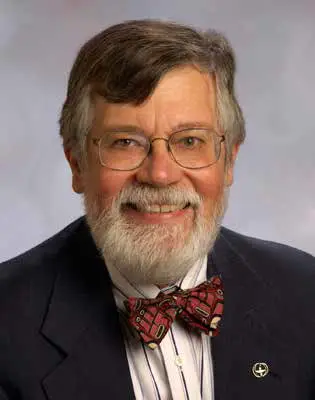
Todd Freeberg became the new director of the College Scholars Program August 1, 2020. He is a professor and associate head of the Department of Psychology and a joint faculty member in the Department of Ecology and Evolutionary Biology. Freeberg is a husband, father of a sixth grader, dog person, and a music lover (and a HUGE fan of Knoxville’s Big Ears Festival).

Freeberg has been at UT since 2002, after obtaining his PhD in biology from Indiana University and postdoctoral work in biological sciences and audiology and speech sciences at Purdue University. He regularly teaches classes in animal behavior, responsible conduct of research, and various topics in First-Year Studies. He loves Knoxville and East Tennessee, but being a winter person, he still does not handle summers here all that well.

Freeberg is in the neuroscience and behavior research area in the Department of Psychology, where he studies animal behavior with a focus on communication. His main area of research involves testing how variation in complexity and diversity of groups of animals affects their communicative, and broader social, behavior.

Animal behavior is an inherently integrative and often interdisciplinary field of study. Interdisciplinary approaches to research questions was one of the key reasons he was interested in the College Scholars program, where scholars excel at such approaches. He is thankful to Professor Kovac for all of his help and advice in making this transition. He will be a very tough act to follow.

Although much of the fall semester will likely still be online, Freeberg is hopeful that College Scholars work can be back to a face-to-face community as soon as possible. His key goals include increasing the diversity of students in the program, increasing the sense of inclusion and community among College Scholars, and increasing the voice and recognition of the program at the university.

Filed Under: Newsletter

Message from Retiring Program Director Jeffrey Kovac

Message from Retiring Program Director Jeffrey Kovac

September 29, 2020 by artsciweb

no photo available

Message from Retiring Program Director Jeffrey Kovac

Profile

Message from Retiring Program Director Jeffrey Kovac

When I was appointed director of College Scholars in the fall 2011, my predecessor, Professor Christopher Craig, told me it was the best job at the University of Tennessee. After nine years as director, I think that was an understatement. Working with the most talented and creative undergraduates at UT and interacting with the amazing alumni of the program is challenging, stimulating, and rewarding. Building on the solid foundation laid down by Chris Craig and the other previous directors, we have had quite a few successes over the past several years.

In 2013, we celebrated the 40th anniversary of the founding of College Scholars with a reunion event in Knoxville, a publication celebrating
40 years of the program (Van-Griner Publishing), and the printing of a beautiful College Scholars poster by alumna Kelsey Roy.

Following a discussion at the reunion, we created a searchable, password-protected online alumni directory on the College Scholars website that allows alumni to reconnect with each other and with the program. To add your profile, please visit scholars.utk.edu/alumni_form.php. We created a College Scholars Facebook page where we regularly post news about current scholars and alumni. We welcome all our alumni to follow us.

In 2014, we established the alumni advisory board, which meets annually to review the program and assist the director. Board members are eight of our distinguished alumni.

We relocated the College Scholars office to a large room in Alumni Memorial Building where we have records of the program and a gallery of photos, posters, and art that illustrate the history of the program.

Three new scholarship endowments have been established since 2011: the Andrew Hoover Scholarship, the Jay and Cindy St. Clair Scholarship, and the Harry C. Jacobson College Scholars Scholarship. The first awards from the Hoover and St. Clair endowments were made in 2018-2019.

As part of the Jacobson Endowment, the top graduate in College Scholars is given the Professor Harry C. Jacobson Memorial Award for Academic Excellence. A special medallion has been created that the winner wears at commencement. The first three winners were Kimberly Bress (’18), Patrick Sonnenberg (’19) and Natalie J. Campbell (’20).

Alumni have been very generous in contributing to the College Scholars Excellence Fund. Since 2014, the average annual contribution has
been more than $13,000, which has allowed us to support senior projects, internships, and travel to conferences. All of these are important experiences and the Excellence Fund allows more students to take advantage of them.

College Scholars continue to excel, winning prestigious national awards including Goldwater Scholarships, Fulbright Scholarships, Critical Language Scholarships, and the Torchbearer Award. Two Scholars, Morgan Hartgrove and Natalie Campbell, have been elected as SGA President.

My last year as director, 2019-2020, was eventful. Due to the COVID-19 pandemic, the university shut down after spring break and all activities were conducted online. We had to adapt. The usual interviews of applicants were conducted via Zoom, as were the last few meetings of the seminar and senior project defenses. Sadly, the usual end-of-semester celebrations, including
the graduation reception for seniors and their families, had to be cancelled. One bright spot was that we invited
14 new Scholars to join the program during the spring semester, bringing the annual total to 18. At least two new Scholars have been added this summer. Discussions with prospective students continue using email and Zoom.

In February, Todd Freeberg, professor of psychology, was appointed as the next director of College Scholars. He and I have been able to work together since then, both in person and remotely, to help him learn how the program works. He will bring both enthusiasm and new ideas to College Scholars.

In my letter of application in 2011, I said that I thought that being the director of College Scholars would be the capstone of my career and it certainly has been. It has been a pleasure to work with both talented students and faculty mentors. As noted on page 11 in this newsletter, as my retirement gift to the program, my wife and I are establishing a new endowment to fund an annual visit by a visiting scholar whose research or creative activity epitomizes the mission of College Scholars. This endowment is a way to say thank you for all that the program has given me.

Filed Under: Newsletter

Campbell Selected for Mitchell Scholarship

Campbell Selected for Mitchell Scholarship

September 29, 2020 by artsciweb

no photo available

Campbell Selected for Mitchell Scholarship

Profile

Campbell Selected for Mitchell Scholarship

Natalie Campbell, a May 2020 graduate, who served as student body president and has earned accolades for her work advocating alongside people with disabilities, was selected for a Mitchell Scholarship, one of the most prestigious undergraduate awards in the country.

She is the first UT student to be named a Mitchell Scholar and one of only 12 members of the George J. Mitchell Scholar Class of 2021, having been chosen in a highly rigorous national selection process that culminated in interviews in Washington, DC, in November 2019.

As a Mitchell Scholar, Campbell will be returning to Northern Ireland to study. As a rising junior, Campbell was selected to participate in the Fulbright UK Summer Institute at Queen’s University Belfast. She was also the first UT student to be awarded a spot in this prestigious program, where she was initially exposed to Queen’s acclaimed shared education program and inspired to pursue the Mitchell. Campbell said she looks forward to expanding her research on inclusive education as a Mitchell Scholar.

“I am incredibly honored to receive this award—it will be my pleasure to represent UT and Tennessee to the Mitchell Scholarship Program and to Northern Ireland,” Campbell said. “My studies at Queen’s will prepare me for a career reforming the quality and type of education students with intellectual disability receive across the United States.

“I am incredibly grateful to my family, who inspire me and were my first educators in advocacy, as well as my professors, advisors, and friends at UT, who have provided wise counsel and extraordinary experiences that have made my success possible.”

Mitchell Scholars are awarded a year of postgraduate study in any discipline offered by institutions of higher learning in Ireland and Northern Ireland. As a Mitchell Scholar, Campbell will pursue a master’s degree in inclusion and special educational needs at Queen’s University Belfast in Northern Ireland.

“We are thrilled to have our first Mitchell Scholar at UT, and even more pleased that the recipient of this prestigious honor is Natalie Campbell,” said Chancellor Donde Plowman. “She is a proven leader on campus and in the greater community, and is committed to helping those around her. We’ve always known that UT students are extraordinary, and it’s wonderful to see them receive international honors. Their success is also a testament to our university’s commitment to excellence in undergraduate scholarship, research, and engagement.”

Andrew Seidler, director of UT’s Office of National Scholarships and Fellowships, which facilitates nomination of UT students for nationally competitive awards, echoed the chancellor’s sentiments: “To have a Mitchell Scholar is a tremendous honor for UT, so it’s fitting that our first Mitchell is Natalie Campbell, who’s made countless leadership contributions to this university and to the disability community in Tennessee. She just has this extraordinary will to instigate important change. I couldn’t be happier for Natalie—she’s absolutely earned this award.”

Campbell, of Farragut, Tennessee, was accepted into College Scholars Program in the fall of 2015 with a program titled Disability Studies. Her mentors were Adam Cureton, associate professor of philosophy, and Juli Sams, lecturer and community outreach practicum coordinator in child and family studies. She also completed a second major in legal and political philosophy. In spring 2020, Campbell was named the third winner of the Professor Harry C. Jacobson Award for Academic Excellence as the top graduate in College Scholars.

Campbell’s advocacy work is inspired by her relationship with her sister, Olivia, who has Down syndrome. Campbell has been advocating alongside people with intellectual disabilities since she was in middle school, when she led a campaign to educate people about the negative impacts of derogatory language regarding people with disabilities and to improve K–12 inclusive education of students with an intellectual disability.

At UT, Campbell has worked closely with UT’s FUTURE postsecondary education program, which helps young adults with intellectual and developmental disabilities make a successful transition from high school to adult life.

Campbell was active in UT’s Student Government Association beginning in her freshman year. In spring 2019, she was honored with an award for extraordinary campus leadership and service and was named a Torchbearer in spring 2020.

The George J. Mitchell Scholarship Program, which honors former US Senator George Mitchell’s contribution to the peace process in Northern Ireland, is designed to introduce and connect generations of future American leaders to the island of Ireland while recognizing and fostering intellectual achievement, leadership, and a commitment to community and public service. The program provides tuition, accommodations, and a stipend for living expenses and travel.

Filed Under: Newsletter

  • « Previous Page
  • 1
  • …
  • 3
  • 4
  • 5
  • 6
  • 7
  • …
  • 11
  • Next Page »

College Scholars Program

College of Arts and Sciences

Austin Peay Building 211
1404 Circle Drive
Knoxville TN 37996-1600

Phone: 865-974-3975
Email: scholars@utk.edu

UT College Scholars Program on Facebook

The University of Tennessee, Knoxville
Knoxville, Tennessee 37996
865-974-1000

The flagship campus of the University of Tennessee System and partner in the Tennessee Transfer Pathway.

ADA Privacy Safety Title IX